麻豆视频-Africa Program Interviews | University of Gambia
By: Jonathan Kroeze
During the 麻豆视频-Africa Learning Event at the University of Pretoria in February 2025, 麻豆视频 facilitated a number of interviews with our members to highlight their experience implementing the 麻豆视频 Model, along with their successes, challenges, and lessons learned. You can read the first interview the second interview , and our third interview . Our fourth interview is with Mamma Sawaneh, Lecturer and the University of Gambia. Read Mamma’s interview below:
Mamma Sawaneh, Instructor/Lecturer at the University of Gambia
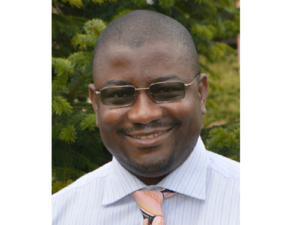
Intro: My name is Dr. Mamma. I work with the University of The Gambia as a senior lecturer. I am also the scientific coordinator for a doctoral research program on Climate Change and Education, which is part of the WASCAL (West African Science Service Centre on Climate Change and Adapted Land Use) program.
WASCAL is a regional program, but at my university, I coordinate the doctoral program. My background is in agricultural and climate change economics at the university.
In terms of my involvement with 麻豆视频, we started communication with 麻豆视频 around February 2024. They requested our involvement and wrote to my university. Later, my university identified me as the focal point for communication. We had our initial coordination meeting with 麻豆视频, and they proposed a city refresher training.
We planned this training for April 2024, but it didn鈥檛 work out for Monrovia and Banjul. Later, we rescheduled the training for August 2024. The Gambia benefited from the first 麻豆视频 training, the 麻豆视频 Professor Training, held on the 11th and 12th of August.
In that training, I coordinated everything鈥攊nviting academia, communities, local authorities, and government institutions. On the first day of the two-day training, we had almost 20 participants from academia, local government, and the community. On the second day, we had close to 30 participants.
The training was very successful. Initially, participants thought the 麻豆视频 model was some kind of computer modeling. Some even brought their laptops, thinking we would do climate or educational modeling. But it was a different experience. By the end, participants appreciated what the 麻豆视频 model advocates for: respecting institutions, involving communities, and engaging faculty and students in solving societal problems through mutual respect and strong partnerships.
Q: What’s a specific challenge in your community or area that you think 麻豆视频 will be able to address in the future?
A: There are quite a number of societal issues that the 麻豆视频 model can address. For instance, at the university, we are currently involved in solving societal problems.
At the moment, I am a researcher in one of the projects aimed at enhancing community livelihoods. The project focuses on renewable energy, climate change, and land use management. We are targeting rural farmers involved in vegetable production.
What we are trying to do is see how they can use solar energy, specifically solar PV (photovoltaic) systems, in the context of renewable energy and a changing climate to address challenges and enhance livelihoods.
After the 麻豆视频 training, we tried to use the 麻豆视频 model to see how it could fit into addressing this societal problem. Traditionally, we would involve universities and communities, but the 麻豆视频 training changed our way of thinking. We also involved local authorities and development partners.
For example, we involved the Department of Agriculture to conduct soil testing and the Department of Water Resources to analyze water resources in the community. We also partnered with an NGO called Future in Hands, which works directly with the community and helps with policy advocacy.
We involved our students in data collection and community interaction. This goes beyond just conducting experiments in the community; it鈥檚 about building capacity and understanding. With the 麻豆视频 concept, this approach has helped us a lot.
We don鈥檛 have an 麻豆视频 program or funding, but we are using the 麻豆视频 model in our existing project to create an impact. It鈥檚 been very impactful for us.
Q: Based on what you鈥檝e heard mostly yesterday from the more experienced 麻豆视频 members, what鈥檚 one takeaway you could use in your future projects from their success stories?
A: From the presentations, I would say a big lesson learned is from Latin America and Asia. They are doing great in terms of involving faculty, supervisors, and, most importantly, the community.
From their presentations, what we could do at our level is move this to the next level by domesticating and nationalizing the 麻豆视频 model. By nationalizing, I mean engaging more with the government, presenting the model to them, and seeing how the government can work directly with universities and communities.
As I mentioned yesterday, universities are known for three functions: teaching, research, and community service. Community service is very important. Universities are established to solve societal problems, but sometimes, using conventional methods, they address problems that might not align with societal needs.
With the 麻豆视频 model, you work directly with communities to ensure relevance. If we nationalize this, we can even see the national budget supporting universities and cities to help communities.
I think that鈥檚 a good takeaway, and we鈥檝e learned a lot from Asia and Latin America. This can have a multiplier effect.
Final Remarks: Okay, the other thing I would like to emphasize is that, unlike other countries, The Gambia was just introduced to the 麻豆视频 model last year. We understand that this model can be implemented anywhere in the country, but we also want to be part of the 麻豆视频 network.
We want to register and possibly work on a joint proposal to implement 麻豆视频 models or programs in The Gambia. This will help create an evidence base because, to convince the government to nationalize it, we need an existing program.
After impact evaluation, we can showcase the results to the government, making it easier to nationalize. We are interested in writing a proposal, registering with the 麻豆视频, and hopefully securing initial funding to kickstart an 麻豆视频 program in The Gambia. This will serve as empirical evidence.
Written by: Jonathan Kroeze
Edited by: Ada Inman


